
Can Old Concrete Floors Be Polished? What to Know
In many cases an old concrete floor can be polished instead of replaced, as long as the slab is stable and properly prepared. Even floors that sat under carpet or tile for years can often be ground smooth, though old coatings, cracks, and past repairs will affect how the finished floor looks.
Allbright Restoration Services provides concrete polishing and restoration in Yucca Valley, Palm Springs, and surrounding Southern California communities. Below, we cover what condition the concrete needs to be in, how it's prepared, what the finished floor looks like, and what drives the cost, so you can decide whether polishing makes sense for your home.
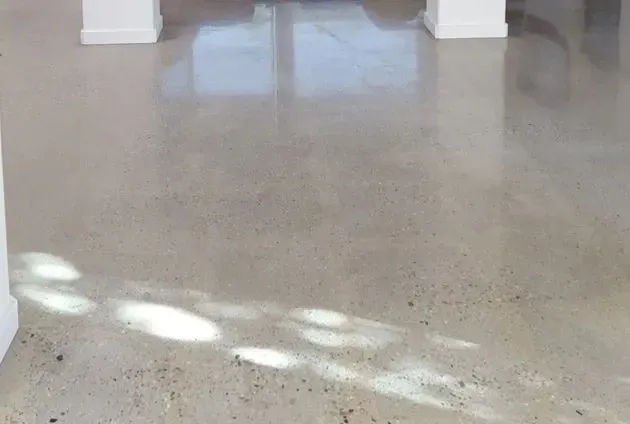
Can Concrete Be Polished After Carpet or Tile?
Concrete can often be polished after carpet, tile, or other flooring is removed, as long as the slab underneath is in suitable shape. Years under a floor covering can leave stains, cracks, and glue behind, so some floors need only light prep while others need quite a bit more. Polishing itself uses specialized grinding equipment to smooth and refine the surface, and the finish can range from a soft matte to a glossy shine.
Picture pulling up worn carpet in an older ranch house and finding a gray slab with a few hairline cracks and patches of dried glue. That floor could be a good candidate, but someone has to see it in person to know what's realistic. If you'd like yours looked at, our concrete polishing services include evaluating existing floors to see what's possible.
What Condition Does Concrete Need to Be in for Polishing?
The concrete doesn't need to be perfect, but it should be structurally sound and stable enough to handle grinding. Minor surface damage can often be repaired first. Significant cracking, movement, or deterioration is a different story, since those can point to problems polishing can't fix. Age alone isn't the deciding factor: an older slab in good shape can be a better candidate than newer concrete with underlying trouble.
Moisture matters too. If a floor stays damp or shows signs of water coming through, that should be sorted out before any polishing starts, because it can affect how the finished floor holds up.
Common Problems That Can Affect Concrete Polishing
Older floors often hide flaws until the old flooring comes up. Cracks, chips, discoloration, and old patchwork are the usual suspects, and leftover adhesive that soaked into the concrete can be stubborn. Some of these can be repaired or reduced, while others stay visible after polishing. A floor with several old repairs, for example, may polish well but still show differences in color or texture. Those variations usually don't hurt performance, but they do change the look, which is worth knowing before you commit.
How Are Old Concrete Floors Prepared for Polishing?
Preparation means cleaning the surface, removing anything sitting on top of the concrete, repairing damage, and then grinding. Old adhesive, paint, and sealers usually have to come off first, since they keep the grinding equipment from working on the concrete itself. Once the floor is ready, diamond abrasives, which are grinding tools set with industrial diamond particles, smooth the surface through several progressively finer stages.
How much prep you need varies a lot. A clean, exposed slab may need little, while one with stubborn coatings or uneven areas takes considerably longer. Good prep matters because anything left unaddressed underneath tends to show up in the final floor.
What to Expect From the Finished Concrete Floor
Polished concrete has a smooth, modern look, but exactly how it turns out depends on the slab you started with. You can choose a sheen anywhere from soft matte to more reflective, and depending on how deep the grinding goes, some of the small stones in the concrete, called aggregate, may show through.
Natural color shifts and the slab's history carry through too, which can add character in rustic or industrial-style homes. If you want a perfectly uniform surface, say so before work starts. Our article on the benefits of polished concrete flooring covers why many homeowners choose this finish.
Cost Factors When Polishing Existing Concrete Floors
The cost of polishing an existing floor depends on its size, condition, how much preparation it needs, and the finish you want. A smooth floor with little damage takes less labor than one with thick coatings, deep cracks, or uneven areas. A high-gloss finish, or deeper grinding to expose aggregate, also means more steps than a simple matte look.
Access matters too, including how easy it is to reach the work area and how much furniture has to be moved. Because every floor is different, a general price per square foot isn't very reliable. A contractor can give you a real estimate after looking at your actual concrete.
Polishing Existing Concrete vs. Replacing the Floor
Polishing can be a practical alternative to replacement when the slab underneath is sound. You skip demolition and the cost of a brand-new flooring material, which can cut down on waste and some installation expenses. It isn't always the cheaper route, though, since heavy repairs or difficult prep can erase those savings.
Replacement tends to make more sense when the slab itself is failing, because grinding the surface can't fix a structural problem. The right call comes down to your floor's condition, your budget, and the look you want.
Concrete Polishing for Homes in Yucca Valley and Palm Springs
Polished concrete can be a good fit for homes across Yucca Valley, Palm Springs, and the surrounding desert communities. The surface is smooth and easy to sweep or mop, which helps where windblown sand and dust find their way indoors. It also pairs well with modern, rustic, and desert-style designs, and if you already have a concrete slab, polishing may be an alternative to covering it with tile or another material.
Regular cleaning still matters to keep the finish looking good. If you're wondering how it handles desert heat, our article on polished concrete flooring in hot climates goes into more detail.
FAQs
Can you polish a concrete floor that has already been painted or sealed?
Yes, once the existing coatings are properly removed. How they come off depends on the type and thickness of the paint or sealer. After that prep work, a contractor can tell whether the concrete underneath is in good enough shape to polish.
How long does it take to polish an existing concrete floor?
Your contractor can give you a reliable schedule once they've seen the floor. Size, condition, and the finish you choose all affect the timeline, and floors needing extensive repairs or coating removal generally take longer than clean, sound slabs.
Can you polish a concrete floor without exposing the aggregate?
Yes, often. A lighter grind can preserve more of the original cement surface. Wear, past repairs, and uneven areas can still make some aggregate show, so a perfectly uniform look isn't guaranteed. It helps to talk through the finish you want before work begins.
Find Out if Your Existing Concrete Floor Can Be Polished
A worn or outdated concrete floor isn't automatically headed for replacement. What matters is the slab's condition, what can be repaired, and whether the finished result will match what you're hoping for.
If you're considering concrete polishing in Yucca Valley, Palm Springs, or nearby communities,
contact Allbright Restoration Services at
(760) 418-0270. We can look at your existing floor, walk you through your options, and help you decide on the best next step.
Expert Contribution by Michael Bonifazi,
Owner of Allbright Restoration Services
With a background in concrete and natural stone restoration dating back to 1986, Michael brings decades of experience helping homeowners and businesses care for their surfaces. Through Allbright Restoration Services, he serves Yucca Valley, CA, and surrounding Southern California communities, specializing in concrete polishing, staining, sealing, repairs, and natural stone restoration. He enjoys bringing worn or damaged surfaces back to life and takes pride in helping customers protect their investment with quality workmanship, attention to detail, and honest communication.